
In early September 2026, the SEO world noticed that Google's AI Mode had stopped citing sources. Google attributed it to a bug in the new Gemini 3.8 Flash model and rolled out a fix within days. Our data shows the decline began three weeks earlier.
What We Measured
Evertune tracked roughly 180,000 AI Mode responses between August 11 and September 3. The average number of sources per response fell steadily across the period:
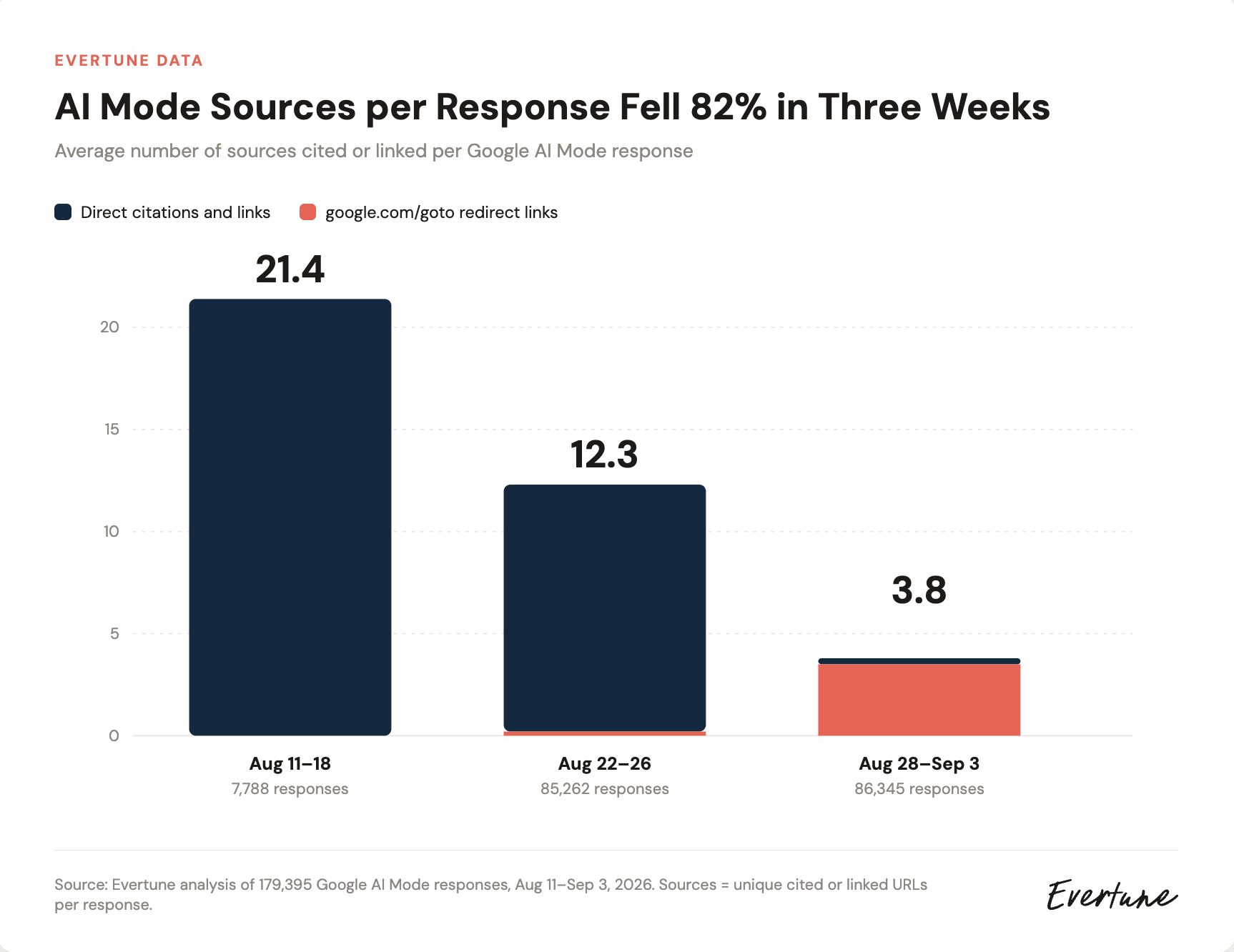
The composition of those sources changed along with the count. In mid-August, a typical AI Mode response carried 19.7 citation URLs and 5 plain links, and 84% of responses contained at least one plain link to a website. By early September, direct citation URLs had fallen to nearly zero and only 6% of responses contained any plain link. Of the 3.8 sources that remained, 3.5 were google.com/goto redirect links, the intermediary URLs Google began wrapping around search results in late August. Nearly every link that survived the reduction now routes through Google.
Other Google Models Didn't Show This Drop
Gemini declined about 30% over the same period, from roughly 5.8 to 4 sources per response and AI Overviews declined around 15%, from roughly 8 to 7 sources per response. The steep decline is specific to AI Mode, and its timing matches the /goto rollout.
The Bug Fix Doesn't Address the Larger Decline
Google was right that zero-citation responses on Gemini 3.8 Flash weren't working as intended, and links began reappearing after the fix. But the reported bug produced responses with no citations at all, and fixing it returns AI Mode to the state it was in just before the model swap, which is about 4 sources per response. Whether counts return to the August level of 20+ is a separate question, and our data gives no indication that they will.
What It Means for Brands
Citations show which sources shaped an AI response. They give the reader a reason to trust the answer, they give marketers visibility into which URLs the model draws from, and they offer a click path back to the sites behind the answer. When a response goes from 21 sources to 4, all three shrink: fewer brands get credited for influencing the answer, fewer signals tell you where the model is looking, and the remaining referral paths run through Google redirects.
What Brands Should Do Now
Know whether you're one of the four.
Establish your current citation rate on the prompts your buyers use, and track it continuously rather than spot-checking.This shift took three weeks to unfold and a fix could change the numbers again next month.
Confirm AI crawlers can reach your site.
You can't be one of the remaining sources if the model can't retrieve your content. Audit how effectively AI bot crawlers access your website and fix what's blocking them.
Put more weight on the conversation itself.
With fewer paths out of the conversation, the recommendation inside it carries more of the weight in how buyers discover and evaluate you. Measure how often AI recommends your brand, not just how often it links to you, and close the gaps: through GEO where you can earn the organic mention, and through paid placements in the conversations where you aren't yet recommended.
We’ll post another update to see if Google changes this behavior in the coming weeks.